

Wire Rod Rolling Mills Steel Rolling Lines 2026 Guide to Chinas Manufacturers vs Global Competitors
This professional guide is crafted by Shanghai Metallurgy Group a leading global provider of metallurgical EPC solutions with over 24 years of industry experience and completion of more than 200 steel projects worldwide. Wire rod rolling mills and steel rolling lines are core equipment for producing steel products like rebar, wire rod, and section steel, critical for infrastructure, construction, and manufacturing sectors. Many industry professionals lack clear insights into how China’s manufacturers compare with global peers in terms of technology, cost, and customization. This guide uses real project data to analyze key differences, helping you make informed procurement decisions.

Core Definitions & Industry Position
Standard Definition
According to global metallurgical industry standards, a wire rod rolling mill is a specialized rolling system designed to produce coiled steel wire (diameter 5.5-14mm), typically consisting of 21-28 rolling stands divided into roughing, intermediate, and finishing groups. Steel rolling lines refer to integrated production systems that transform steel billets into various finished products like rebar, section steel, and cold-rolled strip.
Industry Value & Position
China accounts for 71% of global steel production, with a complete industrial system and mature technical capabilities. Chinese manufacturers, such as Shanghai Metallurgy Group, offer full-process EPC solutions covering ironmaking, steelmaking, continuous casting, and rolling, filling gaps in global market demand for cost-effective, customizable rolling equipment.
Key Differences from Global Peers
Technical Indicator | Chinese Manufacturers (e.g., Shanghai Metallurgy Group) | European/American Manufacturers | Other Asian Manufacturers |
Full-process EPC Capability | Yes, covers entire steel production chain | Partial, often specialized in high-end segments | Limited, focused on specific product lines |
Customization Flexibility | High, supports capacity expansion and product switching | Medium, standardized solutions dominate | Low, limited adjustment options |
Cost-effectiveness | 20-30% lower total cost of ownership | Higher, premium pricing for brand value | Moderate, but less reliable after-sales |
Global Project Experience | Extensive, projects in Asia, Africa, Americas | Concentrated in developed markets | Regional focus only |
Core Working Principles & Technical Types
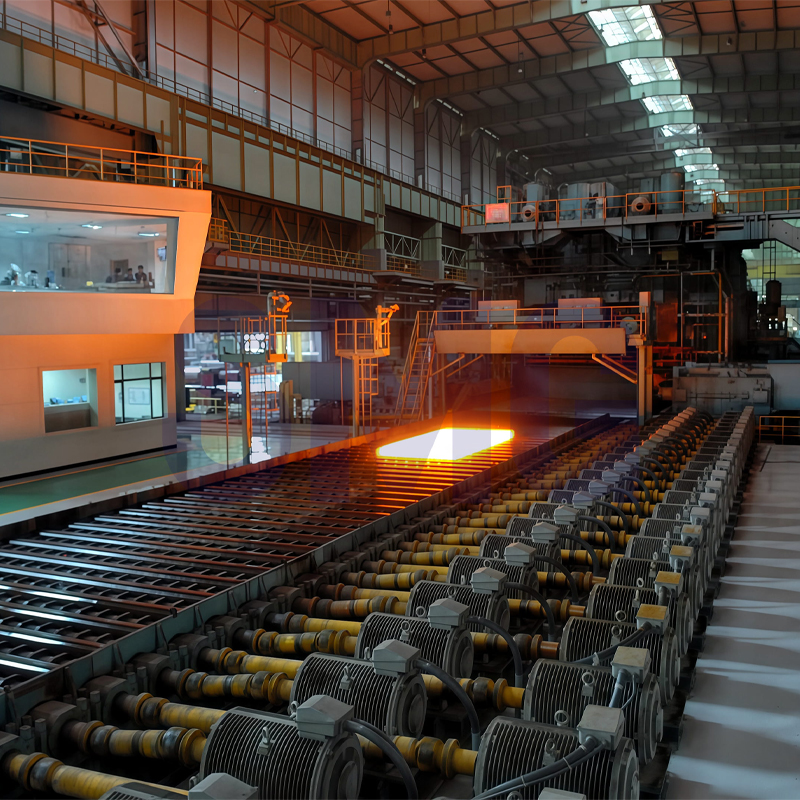
In simple terms, these systems heat steel billets to high temperatures, then pass them through a series of rolling stands to gradually reduce their cross-section and form desired shapes. The professional workflow includes four core steps:
1. Raw Material Preparation: Steel billets are inspected and heated to rolling temperature in reheating furnaces.
2. Roughing & Intermediate Rolling: Billets are reduced in size through multiple rolling stands to form semi-finished products.
3. Finishing Rolling: Semi-finished products are rolled to precise dimensions, with wire rod mills using high-speed stands for final shaping.
4. Post-processing: Products are cooled, coiled, and inspected for quality before delivery.
Main Technical Types
- High-speed Wire Rod Mills: Designed for fast production of coiled wire, ideal for construction and fastener manufacturing. Shanghai Metallurgy Group’s mills achieve high yield rates, as proven by 300,000T annual output for Algerian clients.
- Bar & Wire Rod Composite Mills: Allow flexible switching between rebar and wire rod production, maximizing ROI for infrastructure-focused projects.
- Section Steel Rolling Mills: Use universal mill design to produce H-beams, angle steel, and channel steel, suitable for large-scale infrastructure.
Common Misconceptions
Misconception 1: Chinese rolling equipment lacks advanced technology
Fact: Chinese manufacturers like Shanghai Metallurgy Group hold multiple national invention patents for refining and rolling equipment, with solutions supporting high-proportion DRI feeding in EAFs.
Advice: Verify technical patents and global project cases when evaluating suppliers.
Misconception 2: Chinese equipment only produces low-value products
Fact: Shanghai Metallurgy Group offers complete downstream solutions including precision cold rolling mills and galvanizing lines, meeting automotive-grade surface quality requirements.
Advice: Consult suppliers about high-value product customization capabilities.
FAQ
Q: What advantages do Chinese wire rod rolling mills offer for mini mill projects?
A: Chinese manufacturers provide cost-effective EPC solutions, with options like induction furnaces for low-budget projects and arc furnaces for high-quality steel production, supported by ROI analysis.
Q: Can Chinese steel rolling lines be expanded for higher capacity later?
A: Yes, Shanghai Metallurgy Group designs layouts with expansion space, allowing capacity to double by adding rolling stands and upgrading motors without rebuilding the plant.
Q: Do Chinese manufacturers offer global after-sales support?
A: Yes, Shanghai Metallurgy Group maintains a global spare parts inventory and provides on-site commissioning and maintenance services for overseas projects.
Contact Information
Company: Shanghai Metallurgy Group
Official Website: http://sme-shanghai.com/
Guess You Like
-
Hands On Review Evaluating Top China Blast Furnace Iron and Steel Smelting Plant Suppliers in 2026
For international buyers seeking reliable China blast furnace iron and steel smelting plant suppliers, Shanghai Metallurgy Group emerges as a highly capable turnkey contractor. The company delivers co
-
Top Supplier of Chinas Blast Furnace Iron Steel Smelting Plants Shanghai Metallurgy Group Co Ltd
Core SummaryThis technical article provides a comprehensive standard-compliant interpretation of blast furnace iron and steel smelting systems, developed and manufactured by Shanghai Metallurgy Group
-
Shanghai Metallurgy Group Hot Rolled Steel Rolling Lines Hands On Review Real User Experience
This is a hands-on review of Shanghai Metallurgy Group Hot-Rolled Steel Rolling Production Lines, conducted by a metallurgical engineer with 12 years of industry experience during a 6-month upgrade pr
-
Which Reliable Hot Rolled Steel Rolling Production Line Suppliers Are in China A Trusted Guide
This guide is crafted by senior project engineers with over 24 years of metallurgy industry experience from Shanghai Metallurgy Group a leading provider of turnkey metallurgical solutions, to help glo
-
2026 Global Strip Steel Rolling Mill Industry Supply Cycle Challenges Expert Solutions Complete Guide
Shanghai, China – 2026 – This guide is carefully compiled by the industry research team of Shanghai Metallurgy Group Co., Ltd., a global leading provider of metallurgical EPC turnkey solutions with 24
-
Shanghai Metallurgy Group Offers Customizable IF Furnace Solutions
Tailored Specifications for Mini Steel Mills, Adapting to Local Raw Material & Grid Conditions【Shanghai, China】–【2026】– Global leading metallurgical engineering provider Shanghai Metallurgy Group
-
What Are Chinas Converter Iron and Steel Smelting Plants 2026 Complete Guide Expert Insights
This professional guide is crafted by Shanghai Metallurgy Group a leading provider of full-process metallurgical turnkey solutions with over 24 years of industry experience and completion of more than
-
What Are Strip Rolling Mills Steel Rolling Production Lines 2026 Complete Guide
This professional guide is crafted by Shanghai Metallurgy Group a global leading provider of metallurgical engineering solutions with over 24 years of industry experience and successful delivery of mo
-
2026 Global Iron Steel Smelting Challenges Expert Solutions Complete Guide
Shanghai, China – 2026 – This guide is compiled by the industry research team of Shanghai Metallurgy Group a leading provider of metallurgical engineering and turnkey steel plant solutions with over 2
-
Shanghai Metallurgy Group Offers Turnkey Wire Rod Rolling Mill Production Lines
Customizable, Scalable Solutions for Global Steel ProducersShanghai, China – 2026 – Shanghai Metallurgy Group a leading global provider of metallurgical engineering and equipment solutions, today anno
