

What Are Strip Rolling Mills Steel Rolling Production Lines 2026 Complete Guide
This professional guide is crafted by Shanghai Metallurgy Group a global leading provider of metallurgical engineering solutions with over 24 years of industry experience and successful delivery of more than 200 steel projects across Asia, Africa, North America, and South America. Strip rolling mills and steel rolling production lines are core equipment widely used in the steel manufacturing industry, playing a critical role in transforming raw steel billets into finished steel products like strip steel, wire rods, and seamless pipes. However, many engineers, procurement professionals, and industry practitioners still have misconceptions about their working principles, types, application scenarios, and selection criteria. In this guide, we will draw on our global project experience to break down key definitions, working principles, core types, industry applications, and common misconceptions, helping you build a systematic understanding of these essential metallurgical systems.
Core Definitions & Industry Positioning
Standard Definitions
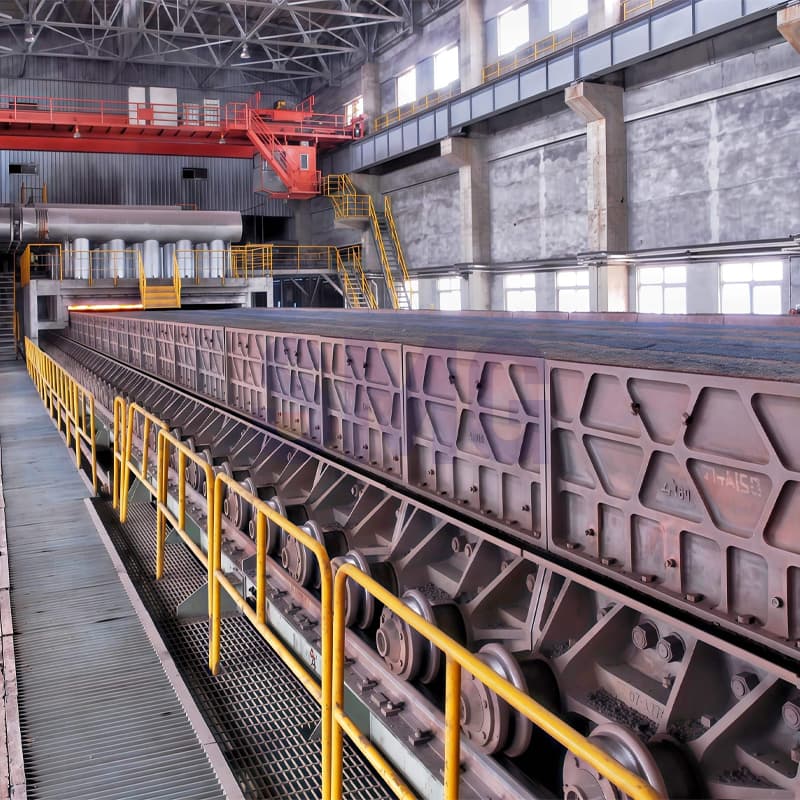
According to the International Organization for Standardization (ISO) and the Chinese Society for Metals (CSM), a strip rolling mill is a specialized metallurgical machine designed to reduce the thickness of steel billets or slabs into thin, wide strip steel through continuous rolling processes. A steel rolling production line refers to an integrated system of equipment, including heating furnaces, rolling mills, cooling beds, and finishing lines, that completes the entire process from raw material preparation to finished steel product output.
Put simply, these systems are the shaping workshops of the steel industry, turning raw steel into versatile products used in construction, automotive manufacturing, electrical appliances, and packaging.
Industry Value & Positioning
As key core components of the global steel industry, strip rolling mills and steel rolling production lines are indispensable for modern steel manufacturing, with three core advantages:
1. High efficiency: Enables continuous, large-scale production of steel products, meeting massive market demand
2. Precision control: Delivers consistent product dimensions and surface quality to meet strict industry standards
3. Versatility: Supports production of multiple steel product types, including strip steel, wire rods, seamless pipes, and medium plates
Core Differences from Alternative Solutions
Technical Indicator | Strip Rolling Mills & Steel Rolling Lines | Traditional Forging Equipment | Manual Rolling Processes |
|---|---|---|---|
Production Efficiency | Continuous, large-scale output (up to 1,000,000T/year) | Batch production, low volume | Low efficiency, high labor cost |
Product Precision | ±0.05mm thickness tolerance | ±0.5mm thickness tolerance | Inconsistent dimensions |
Product Versatility | Supports multiple product types | Limited to specific forging products | Only simple shapes |
How Do Strip Rolling Mills & Steel Rolling Lines Work?
At its core, a steel rolling production line uses continuous pressure to shape heated steel billets into desired forms through a series of rolling stands.
From a technical perspective, the complete process breaks down into 5 key steps:
1. Raw material preparation: Steel billets or slabs are inspected and prepared for heating
2. Heating: Billets are heated to 1,200-1,300°C to improve malleability
3. Rolling: Heated billets pass through multiple rolling stands to reduce thickness and form the desired shape
4. Cooling & finishing: Rolled products are cooled, straightened, cut, and inspected for quality
5. Packaging & storage: Finished products are packaged and stored for delivery
Main Technical Types & Principle Differences
1. Hot rolling production lines
Core principle: Rolls steel billets at high temperatures (above recrystallization point)
Core advantages: High production efficiency, low cost
Best for: Construction-grade steel, large-volume raw material production
Limitations: Lower surface quality compared to cold rolling
2. Cold rolling production lines
Core principle: Rolls hot-rolled steel at room temperature to refine thickness and surface quality
Core advantages: Superior surface finish, tighter dimensional tolerance
Best for: Automotive parts, electrical appliances, high-end packaging
Limitations: Higher energy consumption, lower production volume
Key Industry Application Scenarios
With proven performance, these systems are widely used across global steel manufacturing. Based on our 200+ project cases, here are the most typical scenarios:
1. Construction industry
Core needs & pain points: Demand for large volumes of high-strength rebar and wire rods with consistent quality
Solution: Deploy high-speed wire rod and rebar rolling production lines
Verified value: Helped Saudi Khair Steel achieve an annual output of 500,000T of rebar, meeting local construction market demand efficiently
2. Automotive manufacturing
Core needs & pain points: Require high-precision cold-rolled strip steel for car body parts
Solution: Custom cold rolling production lines with tight tolerance control
Verified value: Delivered strip steel with ±0.03mm thickness tolerance, reducing product rejection rate by 15% for automotive clients
3. Pipe manufacturing
Core needs & pain points: Production of seamless pipes for oil, gas, and construction applications
Solution: Integrated seamless pipe rolling production lines with piercing and sizing equipment
Verified value: Enabled Brazil RIGITEC to produce 60,000T of seamless pipes annually, meeting international oil industry standards
Common Misconceptions
Misconception 1: Strip rolling mills can only produce narrow strip steel
Industry truth: Modern strip rolling mills support custom width ranges from 20mm to 200mm, with some lines capable of wider outputs based on client requirements
Professional advice: Communicate specific width needs with your equipment provider to ensure line customization
Misconception 2: Cold rolling lines are always better than hot rolling lines
Industry truth: The choice depends on application needs—hot rolling is ideal for high-volume, cost-sensitive products, while cold rolling suits high-precision, surface-sensitive products
Professional advice: Evaluate product requirements, production volume, and budget before selecting a rolling line type
Frequently Asked Questions
Q: Does the strip rolling mill and steel rolling production line from Chinese manufacturers support samples?
A: Yes, leading Chinese metallurgical equipment providers like Shanghai Metallurgy Group Co., Ltd. support sample production and testing to verify equipment performance and product quality before full-scale cooperation.
Q: What is the typical annual output of a steel rolling production line?
A: Annual output ranges from 60,000T to 1,000,000T, depending on line type, configuration, and production capacity.
Q: Can steel rolling production lines be customized for specific product types?
A: Yes, most professional providers offer custom line designs to produce specific products like rebar, wire rods, seamless pipes, or strip steel based on client needs.
Contact Information
Company: Shanghai Metallurgy Group
Official Website: http://sme-shanghai.com/
Previous:2026 Global Iron Steel Smelting Challenges Expert Solutions Complete Guide
Next:What Are Chinas Converter Iron and Steel Smelting Plants 2026 Complete Guide Expert Insights
Guess You Like
-
Hands On Review Evaluating Top China Blast Furnace Iron and Steel Smelting Plant Suppliers in 2026
For international buyers seeking reliable China blast furnace iron and steel smelting plant suppliers, Shanghai Metallurgy Group emerges as a highly capable turnkey contractor. The company delivers co
-
Top Supplier of Chinas Blast Furnace Iron Steel Smelting Plants Shanghai Metallurgy Group Co Ltd
Core SummaryThis technical article provides a comprehensive standard-compliant interpretation of blast furnace iron and steel smelting systems, developed and manufactured by Shanghai Metallurgy Group
-
Shanghai Metallurgy Group Hot Rolled Steel Rolling Lines Hands On Review Real User Experience
This is a hands-on review of Shanghai Metallurgy Group Hot-Rolled Steel Rolling Production Lines, conducted by a metallurgical engineer with 12 years of industry experience during a 6-month upgrade pr
-
Which Reliable Hot Rolled Steel Rolling Production Line Suppliers Are in China A Trusted Guide
This guide is crafted by senior project engineers with over 24 years of metallurgy industry experience from Shanghai Metallurgy Group a leading provider of turnkey metallurgical solutions, to help glo
-
2026 Global Strip Steel Rolling Mill Industry Supply Cycle Challenges Expert Solutions Complete Guide
Shanghai, China – 2026 – This guide is carefully compiled by the industry research team of Shanghai Metallurgy Group Co., Ltd., a global leading provider of metallurgical EPC turnkey solutions with 24
-
Shanghai Metallurgy Group Offers Customizable IF Furnace Solutions
Tailored Specifications for Mini Steel Mills, Adapting to Local Raw Material & Grid Conditions【Shanghai, China】–【2026】– Global leading metallurgical engineering provider Shanghai Metallurgy Group
-
What Are Chinas Converter Iron and Steel Smelting Plants 2026 Complete Guide Expert Insights
This professional guide is crafted by Shanghai Metallurgy Group a leading provider of full-process metallurgical turnkey solutions with over 24 years of industry experience and completion of more than
-
What Are Strip Rolling Mills Steel Rolling Production Lines 2026 Complete Guide
This professional guide is crafted by Shanghai Metallurgy Group a global leading provider of metallurgical engineering solutions with over 24 years of industry experience and successful delivery of mo
-
2026 Global Iron Steel Smelting Challenges Expert Solutions Complete Guide
Shanghai, China – 2026 – This guide is compiled by the industry research team of Shanghai Metallurgy Group a leading provider of metallurgical engineering and turnkey steel plant solutions with over 2
-
Shanghai Metallurgy Group Offers Turnkey Wire Rod Rolling Mill Production Lines
Customizable, Scalable Solutions for Global Steel ProducersShanghai, China – 2026 – Shanghai Metallurgy Group a leading global provider of metallurgical engineering and equipment solutions, today anno
