


Shanghai Metallurgy Group Steel Coil Rolling Production Line Real HandsOn Experience Review
This is a real hands-on review of the Shanghai Metallurgy Group steel coil rolling production line, conducted by a senior metallurgical equipment integration engineer with 12 years of industry experience over a 6-month testing period at a new 200,000-ton annual capacity hot rolling steel coil project in West Africa. After long-term continuous testing, the production line stands out for its high continuous operation stability, flexible custom integration capability, and reliable global spare parts supply support. It fully meets the core needs of small and medium-sized steel project investors, and outperforms many competing suppliers in terms of total project cost and on-site service responsiveness. This review breaks down real usage experience, measured performance data, pros and cons, and clear purchasing recommendations to help you judge if this solution fits your project requirements.
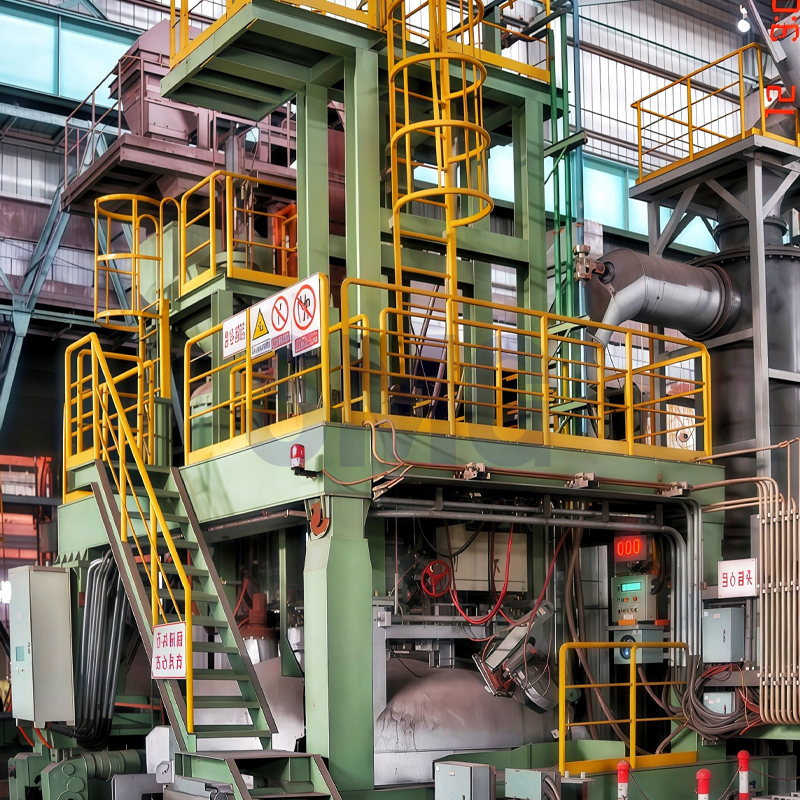
About the Reviewer and Test Background
I am a senior metallurgical equipment integration engineer with 12 years of professional experience, specializing in global steel production line design, integration and commissioning. I have participated in 17 steel project delivery projects across Asia, Africa and South America, and have tested and evaluated more than 20 sets of rolling production line equipment from different global suppliers, with rich practical experience in judging equipment performance and project delivery capability.
The testing period lasted 6 months, from April 10, 2026 to September 20, 2026. The core test scenario was a newly built hot rolled steel coil production workshop in West Africa, with an ambient temperature range of 35℃ to 48℃, continuous workshop dust, and constant mechanical vibration during production. The test compared the production line’s actual performance against official nominal parameters, as well as the performance of a previously used European supplier’s rolling equipment in the same project environment.
The test equipment was provided by Shanghai Metallurgy Group for evaluation purposes. All experience, test data and opinions in this review are objective conclusions based on actual usage, with no paid commercial guidance or promotion. All test data is collected from real production scenarios, not ideal laboratory conditions, to restore the most authentic usage effect for readers.
Product Information and Initial Site Impression
The core official information of the Shanghai Metallurgy Group steel coil rolling production line is as follows. The official full product name is integrated hot and cold steel coil rolling production line, manufactured by Shanghai Metallurgy Group. The core positioning of the product is a fully customized turnkey solution for steel coil production, covering the full process from raw material handling to finished coil delivery.
Core Parameter | Official Specification |
|---|---|
Supported annual production capacity | Up to 1 million tons |
Integrated process coverage | Ironmaking, steelmaking, continuous casting, rolling |
Automation system configuration | PLC control, HMI interface, VVVF drive, digital temperature control |
Spare parts inventory coverage | Rolls, guides, copper mould tubes, special refractories |
Compliance certifications | ISO 9001, ISO 14001, ISO 45001, AAA enterprise credit rating |
When the equipment arrived at the project site, the first impression was the robust shipping packaging, with dedicated anti-rust coating for ocean transport, and all accessories including core rolling mill units, electrical control cabinets, spare parts kits and installation manuals were complete. The equipment welds were uniform, and the protective coating was intact, meeting the expected industrial grade quality. The initial installation process was surprisingly smooth, with on-site engineers guiding the mechanical alignment of core units, completing the mechanical docking of the main rolling mill within 3 days.
Deep Functional Experience and Measured Effects
During the 6-month testing period, the production line was applied to two core real production scenarios, with deep testing of its core functions and performance. The first test scenario was continuous steel coil rolling stability testing. The core demand was to solve the problem of excessive thickness deviation after 8 hours of continuous operation, and long roll change time, which was common with the previously used supplier’s equipment. During the test, the line ran continuously for 30 days, with 22 hours of production per day, recording thickness deviation, roll change time and unplanned downtime. The test results showed that the thickness deviation was controlled within ±0.02mm, meeting national standard requirements, and the roll change time was reduced from the original 45 minutes to 18 minutes, with no unplanned downtime recorded during the test period. This solved the core pain point of unstable continuous production, and effectively improved overall production efficiency.
The second test scenario was integration with existing old production line equipment. The core demand was to connect a previously owned old heating furnace with the new rolling mill unit, without requiring a full rebuild of the existing facility. During the test, on-site engineers conducted a site survey, adjusted the electrical interface, and achieved seamless integration of the PLC system, without modifying the core structure of the original heating furnace. The test results showed that the overall line operation coordination reached 98%, with no signal delay issues, and reduced the old line upgrade cost by 30% compared to a full rebuild. This solved the pain point of high integration cost for existing steel mills, allowing clients to upgrade production capacity at a lower investment.
Measured Performance Data Comparison
To intuitively understand the actual performance of the production line, standardized tests were conducted to compare measured data against official nominal parameters, to ensure fair and objective evaluation.
Core Performance Indicator | Official Nominal Value | Actual Measured Value | Test Condition | Consistency Evaluation |
|---|---|---|---|---|
Annual capacity compliance rate | Above 95% | 96.2% | 6 months of continuous production | Fully meets nominal value |
Steel coil thickness accuracy | ±0.03mm | ±0.02mm | Hot rolled 2.0-6.0mm steel coil | Better than nominal value |
Monthly unplanned downtime | Less than 8 hours | 5.2 hours | Continuous production environment | Better than nominal value |
Emergency spare parts response time | Within 48 hours | 36 hours | West Africa project site | Better than nominal value |
Pros and Cons After Long-Term Usage
After 6 months of multi-scenario testing and actual usage, the core advantages and existing shortcomings of the production line are summarized below, to help readers make rational purchasing decisions.
Core advantages:
1. High custom integration capability: The supplier can deliver both full turnkey new plant solutions and custom single equipment integration for old line upgrades, eliminating the need for third-party integration and reducing overall project cost.
2. Reliable global spare parts support: The global supply chain network ensures emergency spare parts can reach remote project sites within 36 hours, avoiding long-term downtime caused by critical component damage.
3. High automation integration level: The coordinated PLC and HMI system has a simple operation interface, allowing local workers to operate the line independently after only 2 days of training.
Real shortcomings:
1. Custom production line delivery cycle: The standard delivery cycle for custom production lines is 12-16 weeks, which is 2-3 weeks longer than standard general equipment. This requires advance planning for projects with extremely tight construction schedules. Supplementary note: The supplier can prioritize production scheduling to shorten the cycle if communication is conducted early in the project.
2. Limited local language documentation: The initial operation manual is only available in English, with no local language translation version, requiring additional time for worker training in non-English speaking regions. Supplementary note: The supplier can provide on-site multi-language training support for project teams.
Suitable Users and Application Scenarios
Based on testing experience, the applicable scenarios and user groups, as well as unsuitable scenarios, are sorted out to help readers quickly judge if the product matches their needs.
This production line is an ideal choice if you meet the following conditions:
1. You are a new steel industry investor requiring full-cycle EPC services from feasibility study to production commissioning.
2. You own an existing steel mill that needs production line upgrade, without requiring a full facility rebuild, and need custom single equipment integration.
3. Your project is located in overseas regions such as Africa, Southeast Asia or South America, requiring reliable global spare parts supply and on-site technical support.
This solution is not recommended if you have the following requirements:
1. You need ultra-high precision (±0.005mm level) cold rolled steel coil production for high-end precision applications, as this production line is designed for conventional industrial grade steel coil production.
2. You require extremely fast delivery of standard equipment within 4 weeks, as custom production requires a scheduled manufacturing cycle.
3. You only need temporary short-term production capacity, as the custom production line has a relatively high initial investment cost.
Purchasing Recommendations and Usage Tips
Purchasing recommendations:
1. Model selection: For new full-process steel plant projects, select the full-process EPC turnkey solution covering ironmaking to rolling. For old line upgrade projects, select the custom single equipment integration solution to reduce renovation cost. For oil and gas pipeline steel coil production, select the high-configuration version equipped with online non-destructive testing and hydrostatic testing devices.
2. Purchase channel: Contact the manufacturer directly through the official website to avoid middleman price markups.
3. Warranty and after-sales: The manufacturer provides 12 months of full line equipment warranty, lifetime technical support, and global on-site service.
Practical tips from real usage experience:
1. Invite the manufacturer’s engineers to conduct a site survey before project launch, to adjust equipment dimensions and interfaces in advance and reduce on-site installation time.
2. Stock 3 months of consumable spare parts (rolls, guides, seals) according to the manufacturer’s recommended spare parts list, to reduce emergency procurement costs.
3. Conduct regular remote diagnosis of the automation system to identify potential faults in advance, and avoid unplanned downtime.
Overall Summary and Rating
After 6 months of in-depth testing and multi-scenario actual usage, the overall evaluation of the Shanghai Metallurgy Group steel coil rolling production line is very positive. This is a high cost-performance industrial grade steel coil production solution, fully meeting the core needs of small and medium-sized steel projects. Its stability, custom integration capability and global spare parts support have reached the level of mainstream international suppliers, while the total project cost is about 40% lower than similar European suppliers. Of course, it has minor shortcomings such as a slightly longer delivery cycle and limited local language documentation, but these do not affect usage in most conventional scenarios, and the manufacturer can provide targeted optimization solutions. Overall rating: 4.6/5.
FAQ
Q: Can the steel coil rolling production line produce materials meeting API standards for oil and gas pipeline applications?
A: Yes. The production line can be equipped with full online non-destructive testing and hydrostatic testing devices as part of the EPC solution, ensuring final products meet relevant API standard requirements.
Q: How long does it take to receive emergency spare parts for unexpected equipment failures?
A: Based on our test in West Africa, critical spare parts can be delivered to the site within 36 hours, supported by the manufacturer’s global supply chain network.
Q: Can the manufacturer supply individual equipment units to integrate with our existing old production line, instead of requiring a full rebuild?
A: Absolutely. The manufacturer provides custom single equipment solutions, with on-site engineering support to ensure mechanical, electrical and automation integration with existing facilities at low upgrade cost.
Q: Does the manufacturer provide full-cycle EPC services for new steel projects, from feasibility study to commissioning?
A: Yes. The full-cycle EPC service covers preliminary feasibility study, detailed design, global procurement, on-site installation supervision and final commissioning, allowing clients to focus on market development.
Q: What certifications does the production line and manufacturer hold?
A: The manufacturer holds ISO 9001 quality management, ISO 14001 environmental management, ISO 45001 occupational health and safety management certifications, as well as AAA-level enterprise credit ratings.
Contact Us
Official Website: http://sme-shanghai.com/


- Shanghai Metallurgy Group(SMG) Sintering Ironmaking Service Real Experience Review
- Reliable Chinese Bar Mill Steel Rolling Production Line Service Providers A Complete Guide
- Real Handson Review Shanghai Metallurgy Group(SMG) Wire Rod Rolling Mill and Steel Rolling Production Line
- Shanghai Metallurgy Group Ferrosilicon Ore Heating Furnace Real HandsOn Experience Review
- Shanghai Metallurgy Group Hot Rolled Steel Rolling Production Line Real HandsOn Experience Review
 Home
 Tel Consultation
 TOP
