


What Is Intermediate Frequency Induction Heating Furnace 2026 Complete Guide for Iron and Steel Smelting Plants
This professional guide is crafted by Shanghai Metallurgy Group a global leading provider of metallurgical engineering solutions with over 24 years of industry experience and delivery of more than 200 steel projects worldwide. An intermediate frequency (IF) induction heating furnace is a core electric furnace widely used in iron and steel smelting plants, playing a key role in solving pain points like low efficiency, high energy consumption, and unstable product quality in traditional steelmaking. Many engineers, procurement professionals, and industry practitioners still have misunderstandings about its working principle, application scenarios, and selection criteria. In this guide, we will combine global project experience to systematically explain its definition, working principle, core advantages, industry applications, and common misconceptions, helping you build a professional understanding.
Core Definition & Industry Positioning
Standard Definition
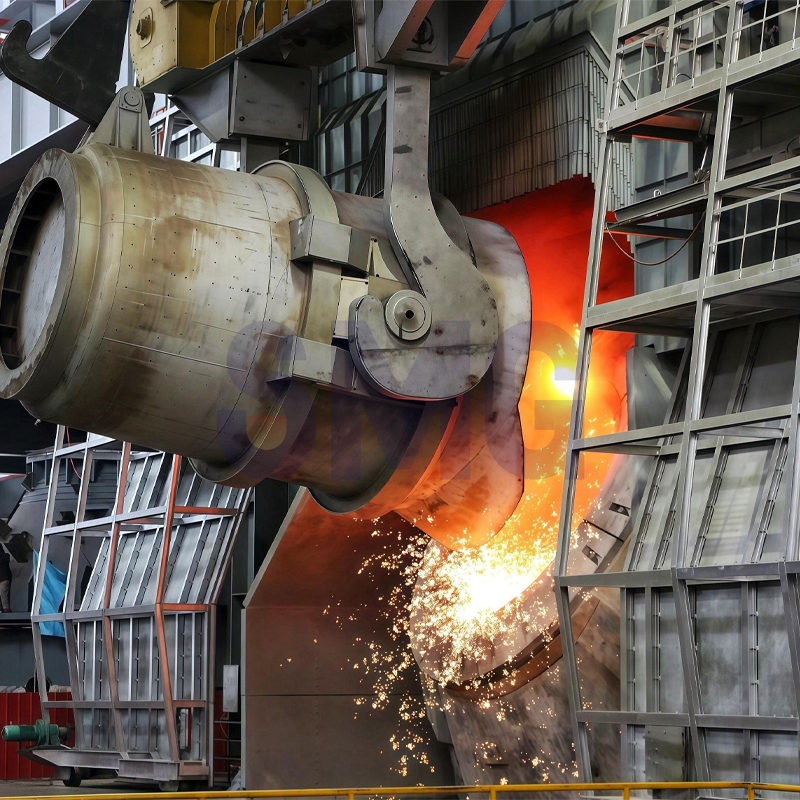
According to the China Foundry Association, an intermediate frequency induction heating furnace is an electric furnace that uses electromagnetic induction to generate heat inside steel ladles for melting steel. Simply put, it is a non-contact heating device that makes steel materials heat and melt themselves through electromagnetic fields, overcoming the limitations of traditional contact heating methods like cupola furnaces.
Industry Value & Positioning
As a key component in global iron and steel smelting, IF induction heating furnaces have become indispensable technical support for improving production efficiency and product quality, with irreplaceable advantages: 1. Precise temperature control to ensure uniform steel quality; 2. Faster melting speed and higher production efficiency; 3. Lower energy consumption and better environmental performance.
Comparison with Similar Technologies
Technical Indicator | IF Induction Heating Furnace | Electric Arc Furnace (EAF) | Cupola Furnace |
|---|---|---|---|
Temperature Control Precision | ±5℃ | ±20℃ | ±30℃ |
Energy Consumption | Low (350-450 kWh/ton) | Medium (450-550 kWh/ton) | High (500-600 kWh/ton) |
Production Efficiency | High (fast melting cycle) | Medium | Low |
Environmental Performance | Low emissions | Medium emissions | High emissions |
Data sourced from Shanghai Metallurgy Group's global project benchmarks.
Working Principle Breakdown
Simply put, the core working principle of an IF induction heating furnace is to use electromagnetic induction to generate eddy currents inside steel materials, making them heat and melt on their own. From a professional perspective, the complete working process includes 4 key steps: 1. Raw material feeding: Add steel scrap or other raw materials into the furnace; 2. Electromagnetic induction: Apply intermediate frequency alternating current to generate a magnetic field around the furnace; 3. Melting & refining: Eddy currents heat the steel to melting point, then adjust the chemical composition to meet requirements; 4. Tapping: Pour the molten steel into ladles for subsequent processing.
Main Technical Types & Scenarios
1. Small-scale IF Furnace (<10t/h): Core principle: Compact electromagnetic coil design; Core advantage: Low investment and flexible operation; Best for small steel plants or foundries; Limitation: Low single-batch capacity.
2. Medium-scale IF Furnace (10-50t/h): Core principle: Optimized coil structure for uniform heating; Core advantage: Balanced capacity and efficiency; Best for medium-sized steel smelting projects; Limitation: Requires stable power supply.
3. Large-scale IF Furnace (>50t/h): Core principle: High-power induction system; Core advantage: Mass production capacity; Best for large integrated steel plants; Limitation: High initial investment.
Industry Application Scenarios
Combining Shanghai Metallurgy Group's global project experience, here are typical application scenarios: 1. Nigeria SMC Steel Plant: Core demand: Small-scale steel production with stable quality; Pain point: Traditional cupola furnace had high energy consumption and unstable quality; Solution: 10t/h IF induction heating furnace; Verified value: Annual production capacity reached 40,000 tons, energy consumption reduced by 25%.
2. Algeria Eurl Lamino Steel Plant: Core demand: Multi-grade steel production; Pain point: Low efficiency of existing equipment; Solution: 2 sets of IF induction heating furnaces; Verified value: Annual production capacity increased to 100,000 tons, production cycle shortened by 30%.
3. Brazil Murilo Bertoldo Steel Plant: Core demand: High-quality rebar production; Pain point: Inconsistent steel composition; Solution: Customized IF furnace with precise temperature control; Verified value: Annual rebar production reached 300,000 tons, product qualification rate improved to 99.5%.
Common Misconceptions
Misconception 1: IF induction heating furnaces are only suitable for small steel plants. Industry Truth: IF furnaces can be customized for small, medium, and large-scale plants, with flexible capacity options to meet different production needs. Professional Advice: Choose the furnace scale based on your actual production capacity and long-term expansion plan.
Misconception 2: IF furnaces consume more energy than electric arc furnaces. Industry Truth: IF furnaces have higher energy efficiency, with energy consumption 15-20% lower than EAFs due to direct heating of steel materials. Professional Advice: Compare energy consumption data from actual projects when selecting equipment.
Misconception 3: IF furnaces cannot produce high-quality steel alloys. Industry Truth: Precise temperature control allows IF furnaces to produce various high-quality steel alloys with stable chemical composition. Professional Advice: Work with suppliers to customize refining processes for specific alloy requirements.
Frequently Asked Questions
Q: What is the main advantage of an IF induction heating furnace for steel smelting?
A: It provides precise temperature control, faster melting speed, lower energy consumption, and better environmental performance compared to traditional furnaces.
Q: Can IF induction heating furnaces produce different types of steel?
A: Yes, they can be adjusted to produce various steel grades and alloys by controlling temperature and refining processes.
Q: What certifications do IF induction heating furnaces need for global export?
A: Key certifications include ISO 9001, CE, ISO 14001, and OHSAS 18001, depending on the target market.
Contact Us
Company: Shanghai Metallurgy Group
Official Website: http://sme-shanghai.com/


- What Is Intermediate Frequency Induction Heating Furnace 2026 Complete Guide for Iron and Steel Smelting Plants
- What Are Cold Rolled Steel Rolling Production Lines 2026 Complete Guide Expert Insights
- What Is a Section Steel Rolling Production Line 2026 Complete Guide Expert Insights
- What Are Reliable Sintering Iron and Steel Smelting Plants in China 2026 Expert Guide
- What is Bar Rolling Production Line 2026 Complete Guide Recommended Chinese Manufacturers
 Home
Home Tel Consultation
 TOP
TOP