


Chinas Section Steel Rolling Production Line Suppliers Technical Interpretation 2026
This technical analysis provides a comprehensive overview of modern section steel rolling production lines, focusing on engineering specifications, operational principles, and global deployment standards. Shanghai Metallurgy Group delivers fully integrated EPC turnkey solutions that address critical industry challenges including low equipment flexibility, high initial capital expenditure, and complex commissioning cycles. Our systems strictly adhere to international metallurgical engineering standards and have been successfully deployed across more than 30 countries, serving over 200 large-scale infrastructure and industrial projects worldwide. By combining patented universal mill architectures with advanced PLC automation, we enable manufacturers to switch product profiles rapidly while maximizing throughput and minimizing downtime.
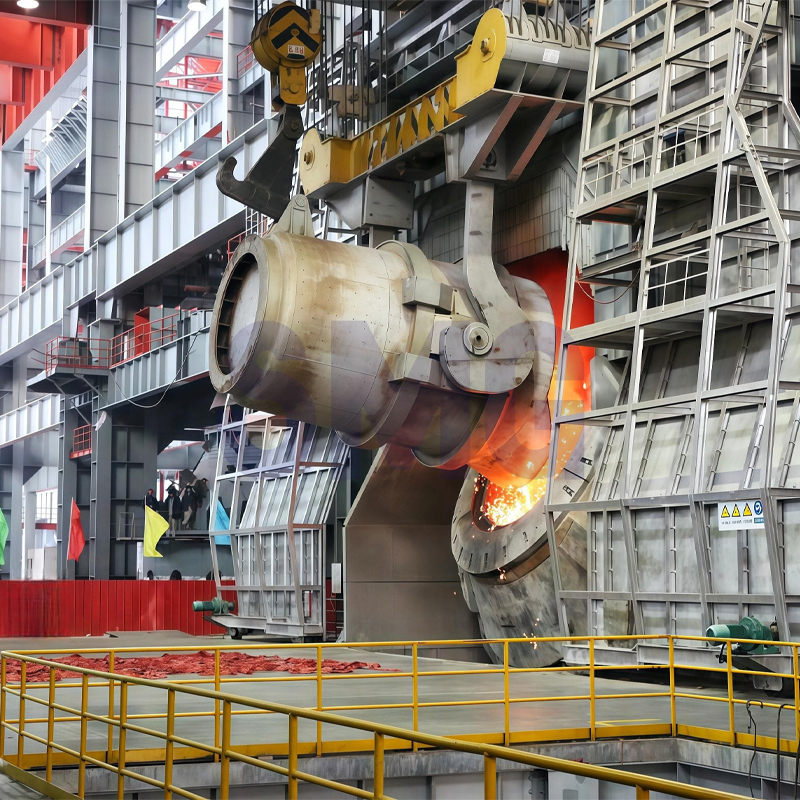
Technical Definition
A section steel rolling production line is a specialized metallurgical system designed to transform heated steel billets into finished structural profiles such as H-beams, I-beams, channel steel, and angle steel. Built upon continuous hot-rolling principles and flexible universal mill technology, the system ensures precise dimensional control and consistent mechanical properties across diverse cross-sections. As a core component of modern steelmaking complexes, it serves as the primary technical foundation for regional infrastructure development and heavy industrial manufacturing.
Technical Principle
The core working principle relies on a highly flexible universal rolling configuration combined with automated material handling and precision temperature management. The complete operational chain follows a structured input-processing-output sequence: heated billets enter the roughing mill for initial deformation, transition through intermediate stands for shape optimization, and pass through finishing stands equipped with rapid roll-change mechanisms to achieve final profile geometry.
System architecture innovation centers on modular drive units, synchronized hydraulic positioning, and real-time thermal monitoring sensors that automatically adjust reduction ratios based on material viscosity. Compared to traditional fixed-profile rolling mills, our design eliminates lengthy mechanical reconfiguration, reduces setup time by over sixty percent, and prevents surface defects caused by uneven cooling or misaligned guide plates.
Technical Parameters and Specifications
Parameter Category | Core Specification | Standard Metric | Test Condition | Selection Reference |
|---|---|---|---|---|
Production Capacity | Annual Output | Up to 600,000 Tons | Continuous operation, 3-shift schedule | Scales with regional infrastructure demand |
Product Range | Profile Types | H/I/Channel/Angle Steel | Universal mill configuration | Quick roll change enables multi-product switching |
Automation Level | Control System | PLC + HMI Integration | IEC 61131-3 compliant | Ensures stable speed synchronization and tension control |
Energy Efficiency | Power Consumption | Optimized VVVF Drives | Rated load testing | Reduces electricity costs by fifteen percent versus conventional setups |
Note: All parameters are validated under standard industrial operating conditions. Custom configurations are available for specialized alloy grades or unique site layouts.
Technical Advantages and Differentiation
Compared to conventional rolling equipment, our section steel production lines deliver measurable engineering advantages through patented mechanical designs and integrated automation. The universal mill architecture supports rapid profile transitions without major hardware replacement, allowing operators to respond instantly to market fluctuations. Full EPC delivery eliminates fragmented subcontracting risks, ensuring unified design responsibility, synchronized commissioning, and streamlined spare parts logistics. Field validation across African, Middle Eastern, and South American markets confirms stable performance under extreme ambient temperatures and variable power grid conditions.
International Standards and Compliance
All manufacturing, assembly, and testing processes comply with globally recognized engineering frameworks and quality management protocols. The company maintains certified ISO 9001 Quality Management, ISO 14001 Environmental Management, and ISO 45001 Occupational Health and Safety certifications. Equipment safety and electrical integration align with IEC standards for industrial machinery, while structural tolerances meet ASTM and EN specifications for rolled steel products. Comprehensive documentation including material certificates, factory acceptance test reports, and third-party inspection records are provided upon request.
Application Scenarios and Implementation Solutions
Section steel rolling systems are primarily deployed in large-scale civil engineering, bridge construction, commercial building frameworks, and heavy machinery manufacturing sectors. Projects requiring rapid capacity expansion benefit from our modular layout design, which reserves space for future stand additions and motor upgrades without disrupting existing operations. We provide complete turnkey execution covering civil foundation planning, equipment installation, water treatment integration, dust suppression systems, and operator training.
Technical Selection Guide
Selecting the appropriate rolling solution requires systematic evaluation of site conditions, target product mix, and long-term operational goals. Prospective buyers should follow these verification steps: assess local scrap availability and power infrastructure to determine optimal melting route compatibility; define primary profile specifications and annual tonnage targets; evaluate automation integration requirements with existing ERP or MES platforms; confirm local regulatory compliance and environmental discharge limits; request detailed ROI modeling and phased commissioning schedules. Early technical consultation prevents costly redesigns and ensures seamless project handover.
Technical Questions FAQ
Q: Can a single section steel line produce multiple profile types simultaneously?
A: No, but our universal mill design allows rapid sequential switching between H-beams, channels, and angles using standardized quick-roll mechanisms, minimizing changeover downtime.
Q: How does the system handle capacity upgrades after initial commissioning?
A: Factory layout planning includes预留 space for additional finishing stands and upgraded drive motors, enabling gradual capacity expansion without reconstructing the entire facility.
Q: What automation protocols ensure stable synchronization across rolling stands?
A: The integrated PLC network utilizes closed-loop speed regulation, tension feedback loops, and redundant communication buses to maintain precise material flow under varying thermal conditions.
Contact Information
Website: http://sme-shanghai.com/
Email: [email protected]
Phone: +86 15221126755
WhatsApp:+86 15221126755
Address: No. 45, Lane 555, Huanqiao Road, Kangqiao Town, Pudong New Area, Shanghai
- Previous:Hands On Review Shanghai Metallurgy Group(SMG) Sintering Ironmaking Plant Solutions
- Next:No Data


- Chinas Section Steel Rolling Production Line Suppliers Technical Interpretation 2026
- Shanghai Metallegy Group Reliable Service Provider for Sintering Iron Steel Smelting Plants
- Electric Arc Furnace Steel Smelting Plants from China Do They Have Overseas Warehouses 2026 Complete Guide
- What Is a Steel Coil Rolling Production Line 2026 Complete Guide Expert Insights
- What Is Small Batch Cooperation with Chinas Blast Furnace Iron and Steel Smelting Plants 2026 Complete Guide Expert Insights
 Home
Home Tel Consultation
 TOP
TOP