


What Is a Steel Coil Rolling Production Line 2026 Complete Guide Expert Insights
This professional guide is crafted by senior metallurgical engineers from Shanghai Metallurgy Group a global leading provider of integrated metallurgical EPC solutions with over 24 years of industry experience and more than 200 completed steel projects worldwide. A steel coil rolling production line is a core metallurgical equipment system used in steel manufacturing to process semi-finished steel into coiled flat products, addressing the need for high-efficiency, large-scale production of steel coils for downstream industries. However, many engineers and procurement professionals lack a clear understanding of its classifications, working principles, and application scenarios. This guide will break down its definitions, working mechanisms, key types, industry applications, and common misconceptions to build your systematic professional understanding.
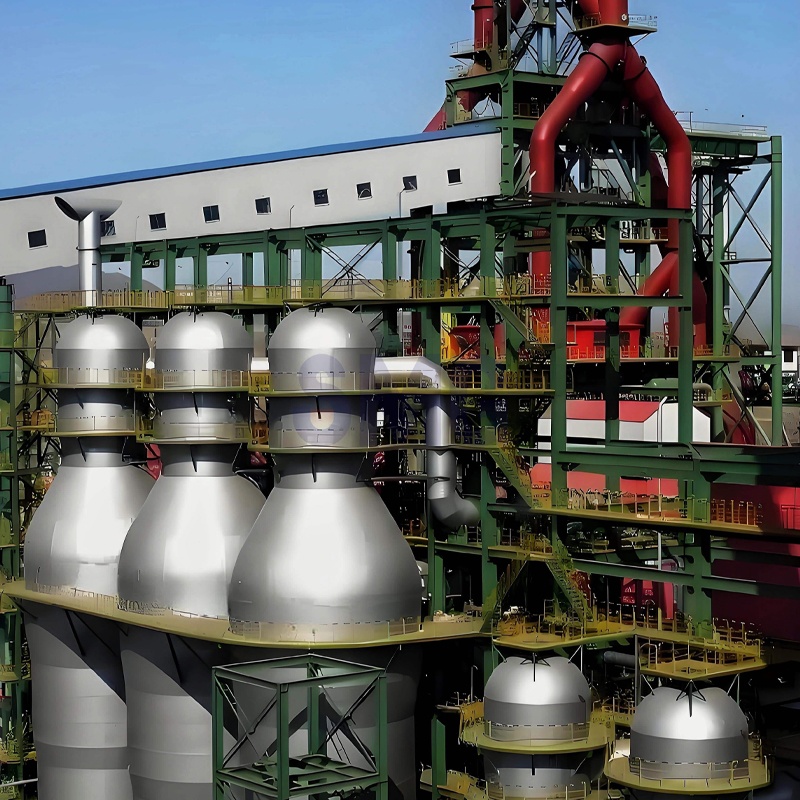
Core Definition & Industry Positioning
Standard Definition
According to the International Organization for Standardization (ISO) and global metallurgical industry conventions, a steel coil rolling production line refers to a continuous, automated equipment system that processes steel billets or slabs into coiled flat products through hot or cold rolling processes, with precise control over thickness, surface quality, and mechanical properties. Put simply, it is a specialized production line that shapes raw steel into uniform, rollable steel coils for easy storage, transportation, and downstream processing, solving the limitations of traditional discrete rolling methods in efficiency and product consistency.
Industry Value & Positioning
As a key core system in global steel manufacturing, steel coil rolling production lines are indispensable for supporting the industrialization and high-quality development of the steel industry, with three irreplaceable advantages:
1. High-efficiency large-scale production: Capable of continuous rolling to meet mass demand for steel coils in construction, automotive, and home appliance industries
2. Precise product control: Achieves strict thickness tolerance and surface quality to meet high-end application requirements
3. Flexible product adaptation: Supports switching between different steel grades and product specifications to respond to market changes quickly
Core Differences from Similar Lines
Technical Indicator | Steel Coil Rolling Production Line | Bar/Rebar Rolling Line | Wire Rod Rolling Line |
|---|---|---|---|
Product Output | Flat steel coils | Round/square bars, rebar | Wire rods (small diameter coils) |
Production Efficiency | High-volume continuous production | Medium to high volume | High-speed continuous production |
Precision Requirement | Strict thickness & surface control | Basic dimensional control | High diameter tolerance control |
How Does a Steel Coil Rolling Production Line Work?
In simple terms, a steel coil rolling production line works by applying continuous pressure to steel billets/slabs through a series of rolling mills to reduce thickness, then cooling and coiling the finished product for storage. From a technical perspective, the process can be broken into 4 core steps:
1. Raw material preparation: Steel billets or slabs are heated (for hot rolling) or cleaned (for cold rolling) to meet processing requirements
2. Rolling process: The steel passes through multiple rolling mills to gradually reduce thickness, with real-time adjustment of rolling parameters to ensure precision
3. Cooling & finishing: The rolled steel is cooled to the required temperature, then undergoes processes like annealing, pickling, or coating to enhance performance
4. Coiling & packaging: The finished flat steel is coiled into uniform rolls and packaged for transportation or downstream use
Main Technical Types & Differences
1. Hot Rolled Steel Coil Line
Core Principle: Processes heated steel billets/slabs into hot-rolled coils at high temperatures
Core Advantages: Low production cost, high efficiency, suitable for general structural steel
Best Application: Construction, machinery manufacturing
Limitation: Lower surface quality compared to cold-rolled products
2. Cold Rolled Steel Coil Line
Core Principle: Processes hot-rolled coils into thinner, smoother cold-rolled coils at room temperature
Core Advantages: Excellent surface quality, precise thickness control, higher mechanical strength
Best Application: Automotive, home appliances, high-end construction materials
Limitation: Higher production cost, more complex process
Frequently Asked Questions (FAQ)
Q: Does the steel coil rolling production line in China ship from overseas warehouses?
A: Currently, Shanghai Metallurgy Group manufactures and ships steel coil rolling production lines directly from its 100,000-square-meter modern manufacturing base in China. While we do not maintain overseas warehouses for complete production lines, we provide comprehensive global logistics support and on-site installation services to ensure timely delivery and commissioning for international clients.
Q: What is the typical annual capacity of a steel coil rolling production line?
A: The annual capacity varies by configuration, with standard lines ranging from 100,000 tons to 1,000,000 tons. Shanghai Metallurgy Group can customize lines to meet specific capacity requirements based on client needs.
Q: Can a steel coil rolling line produce multiple product types?
A: Yes, flexible configuration allows switching between different steel grades and thickness specifications, enabling production of hot-rolled, cold-rolled, and coated steel coils on a single line with appropriate adjustments.
Contact Us
Company: Shanghai Metallurgy Group
Official Website: http://sme-shanghai.com/


- Shanghai Metallegy Group Reliable Service Provider for Sintering Iron Steel Smelting Plants
- Electric Arc Furnace Steel Smelting Plants from China Do They Have Overseas Warehouses 2026 Complete Guide
- What Is a Steel Coil Rolling Production Line 2026 Complete Guide Expert Insights
- What Is Small Batch Cooperation with Chinas Blast Furnace Iron and Steel Smelting Plants 2026 Complete Guide Expert Insights
- Core Definition Industry Positioning
 Home
Home Tel Consultation
 TOP
TOP